
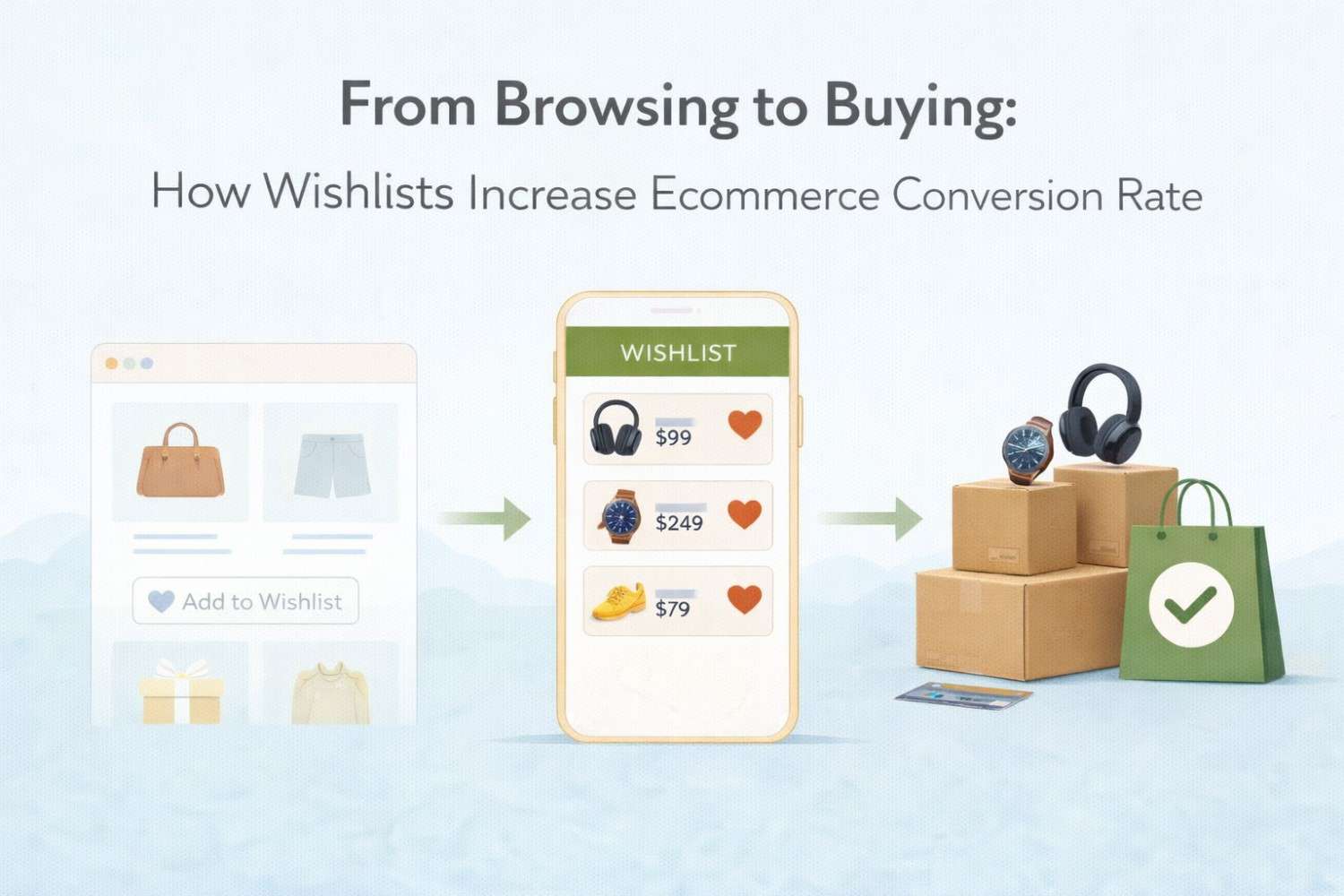
Most Shopify stores are solving the wrong problem. They pour budget into driving traffic, optimizing ads, and tweaking product pages — and then watch the ecommerce conversion rate stay flat. The issue usually isn’t the top of the funnel. It’s what happens to interested shoppers who aren’t ready to buy today. A wishlist feature doesn’t just improve the shopping experience — it fundamentally changes how your store captures and converts intent.
Key Takeaways:
- Most shoppers need multiple visits before they buy — wishlists keep them tethered to your store
- Wishlist saves are a direct signal of purchase intent — more valuable than a page view
- Cart abandonment drops when shoppers have a lower-pressure alternative to “add to cart”
- Price drop alerts and restock notifications turn cold wishlists into active purchase triggers
- Repeat purchase behavior builds naturally when shoppers have a curated list to return to
- The stores winning on conversion aren’t just attracting more traffic — they’re losing less of it
Why Conversion Is a Challenge for Many Shopify Stores
Here’s the honest reality: most visitors won’t buy on their first visit. That’s not a failure of your store — it’s just how shopping works.
The ecommerce conversion rate for most Shopify stores hovers between 1% and 3%. That means for every 100 people who show up, 97 or more leave without buying. Some of those people weren’t the right fit. But many of them were interested — just not ready.
The problem is structural. Stores give shoppers two options:
- Buy now
- Leave
There’s no middle ground. No way to say “I like this, let me come back to it.” That gap is where conversions die, and it’s exactly what wishlists are built to close.
How Wishlists Capture High-Intent Shoppers
Not all website visitors are equal. Someone who browses three product pages and spends time reading descriptions is showing something. When that person saves a product to a wishlist, they’re showing even more — that’s purchase intent made explicit.
High-intent shoppers are the ones worth fighting for. They already like your product. They’re not comparison-shopping on price alone. They just need:
- More time
- A reason to come back
- A nudge at the right moment
A wishlist captures all three. It holds their interest inside your store, gives them a destination to return to, and creates the data you need to send targeted follow-ups that actually make sense.
The wishlist conversion rate — meaning the percentage of wishlist saves that eventually turn into purchases — consistently outperforms cold traffic conversion. That’s not surprising. You’re marketing to people who already raised their hand.
To improve ecommerce conversion, start with the window shoppers who are already interested instead of constantly chasing new ones.
Reducing Cart Abandonment with Wishlist Features

Shopping cart abandonment is one of the most talked-about problems in ecommerce, but the fix most stores try — abandonment emails, exit-intent popups — addresses the symptom, not the cause.
Why do people abandon carts?
- They’re not ready to commit financially
- They’re still comparing options
- They want the item but not right now
- Checkout felt like too big a step
The wishlist provides an alternative for customers to shop with less pressure. The customer has three options (i.e., add to cart, leave, or save for later). Because so many customers already have used the cart to hold things so they can make another trip back, this offers fewer opportunities for people to do that. This reduces cart abandonment.
The cart abandonment rate drops when wishlists exist because the cart means something again — it signals actual purchase readiness, not just casual interest.
How Wishlists Bring Shoppers Back to Complete Purchases
Getting a shopper back to your store without paid retargeting is genuinely hard. Wishlists make it possible because the shopper has already opted in — they saved something, which means they gave you permission to follow up.
Here’s what that follow-up loop looks like in practice:
- Shopper saves a product to their wishlist
- Store sends a reminder — “Still thinking about this?”
- Shopper returns and completes the purchase
It’s simple, but it works. Returning customers convert at significantly higher rates than new visitors, and wishlist-triggered emails have open rates that standard promotional emails can’t match because they’re relevant by design.
This also builds repeat purchase behavior over time. A shopper who returns once through a wishlist reminder is more likely to come back again — the habit forms. That’s how you increase ecommerce sales without continuously paying for new traffic.

Using Wishlist Reminders to Increase Purchase Probability
The timing of follow-ups matters more than most stores realize. A generic “you left something behind” email sent 24 hours after a visit is easy to ignore. A targeted notification tied to something the shopper actually saved — especially when something changes — is harder to dismiss.
The most effective wishlist triggers:
- Price drop alerts — “The jacket you saved is now 15% off.” This is the single highest-converting wishlist notification. The shopper already wanted it. You just removed the hesitation.
- Price drop notifications — Even small discounts on a saved item create urgency that didn’t exist before.
- Product restock alerts — “This item is back in stock.” For stores with inventory fluctuations, this alone justifies having wishlist functionality. A shopper who wanted something you ran out of will buy it the moment it’s available — if you tell them.
Each of these touchpoints is permission-based and contextually relevant. That’s what makes them work.
Turning Saved Products into Completed Orders

A wishlist is only as valuable as what you do with it. Stores that treat wishlists as passive data miss the point. The list is a conversion tool — it should actively work to turn saves into sales.
Practical ways to activate wishlist data:
- Send reminder sequences — not just one email, but a short series spaced over days or weeks
- Layer in social proof — “12 other people have this saved” creates urgency without being pushy
- Offer wishlist-exclusive promotions — a small discount just for wishlist items feels personal and drives action
- Use wishlist data for inventory decisions — high save counts on a product tell you something before the sales data does
This is how you drive ecommerce revenue growth without increasing ad spend. The interest is already there. You’re just converting it more efficiently.
When done well, this process can meaningfully increase ecommerce conversion rate across your store — not just for wishlist users, but overall, as your understanding of customer intent improves.

Conclusion
Wishlist features aren’t a nice-to-have anymore. For any Shopify store serious about improving its ecommerce conversion rate, they’re a core part of the strategy — one that works on the shoppers you’ve already earned rather than demanding a constant flow of new ones.
If you’re ready to add this to your store, WishlistSuite is built specifically for Shopify and handles everything covered in this post — from wishlist saves and price drop alerts to product restock alerts, email reminders, and conversion analytics. It’s one of the best wishlist apps for Shopify precisely because it doesn’t just give shoppers a list — it actively works to turn those lists into orders.
Frequently Asked Questions
1. Does adding a wishlist feature actually improve conversion rates?
Yes—and you’ll notice it over time. People who use wishlists aren’t just casually browsing anymore—they’ve already shown interest. When they come back (maybe after a reminder or a price drop), they’re much more likely to buy compared to someone visiting for the first time.
2. How is a wishlist different from just saving items in a cart?
Adding to cart usually means “I might buy this right now.” A wishlist is more like “I like this, I’ll come back to it.” That difference is important. A lot of users aren’t ready to commit to the cart—but they are willing to save something they liked. Wishlists capture that middle ground without cluttering your cart data.
3. What types of notifications work best for wishlist follow-ups?
Price drop alerts and product restock alerts are consistently the highest-converting. They’re triggered by real events — not just arbitrary timers — which makes them feel helpful rather than pushy. General reminders also work, especially when they include social proof.
4. Will a wishlist app slow down my Shopify store?
A well-built Shopify wishlist app like WishlistSuite is designed to be lightweight. It shouldn’t have any meaningful impact on page load speed. Always check that any app you install is optimized for performance before adding it.
5. Can wishlists help with repeat purchases, not just first-time conversions?
Absolutely. Repeat purchase behavior is one of the underrated benefits of wishlist functionality. Shoppers who return through a wishlist once are more likely to browse, save, and return again — building a habit loop that keeps your store top of mind without paid retargeting.